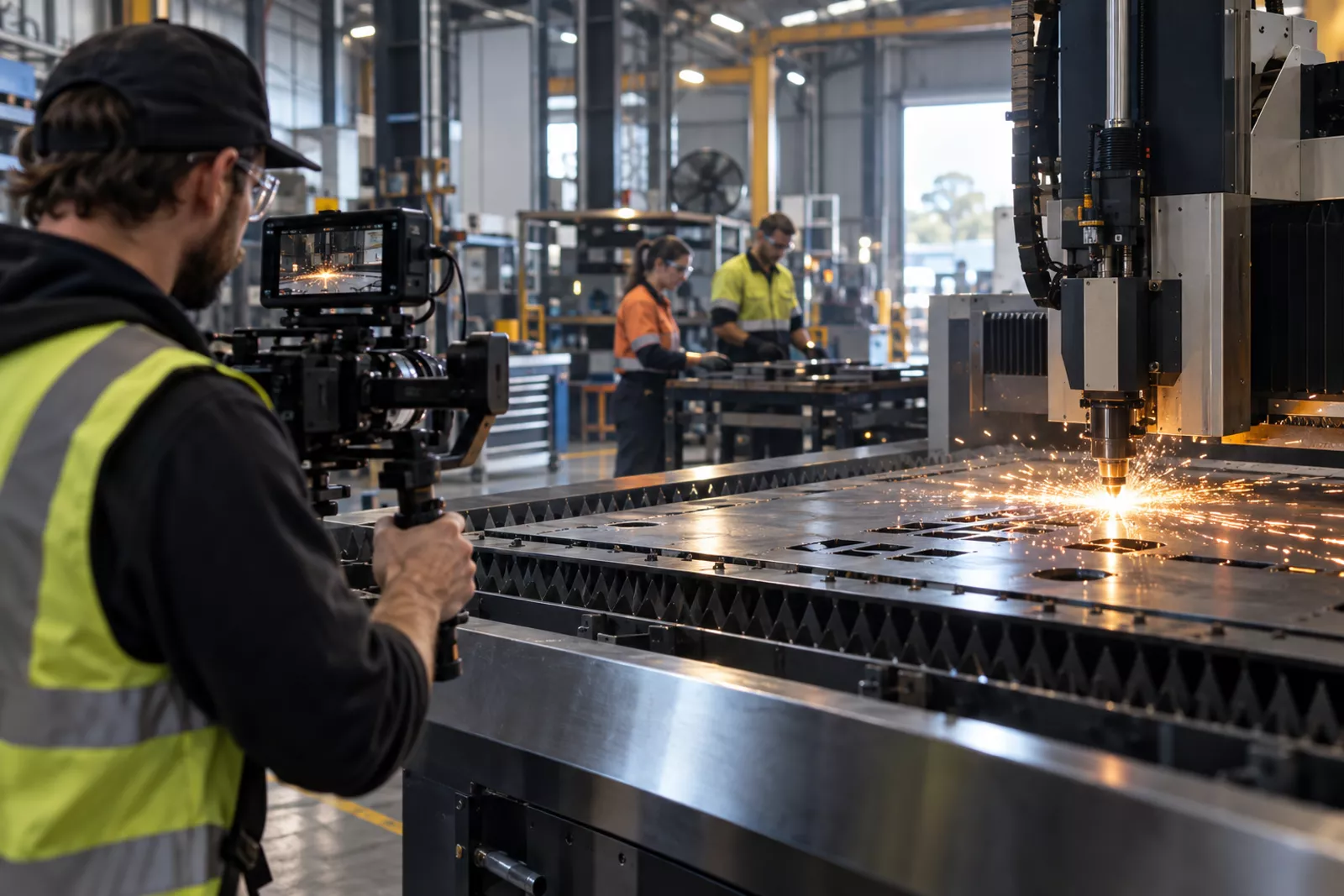
Manufacturing and industrial businesses often have the most impressive things to film: precision machinery, skilled trades, huge facilities, and products that go on to power other industries. Yet they’re often the slowest to use video. Buyers, engineers and procurement teams increasingly research online before they talk to sales, and video is one of the clearest ways to show capability.
Why video works for industrial businesses
- It shows capability you can’t describe well in text. Tolerances, scale, cleanliness, safety culture and workflow are far easier to show than to explain.
- It shortens complex sales. Technical buyers can see your process before the site visit, and sometimes instead of one.
- It helps with recruitment. Skilled trades are in high demand, and a video of your workplace and team can set you apart.
- It scales training. Consistent video instructions for procedures, equipment and safety save supervisors’ time.
The most useful types of manufacturing video
Capability or facility overview
A two-to-three minute tour of your operation: equipment, processes, quality control, certifications and the people behind it. It becomes your most-used sales asset, on the website, in proposals and on trade show screens.
Product and process demonstrations
Show how a product is made or how it performs. Close-up and slow-motion footage of machining, fabrication or assembly is compelling and helps buyers understand quality.
Case studies
Walk through a real project: the client’s problem, how you solved it and the outcome. Pair footage with interviews from your engineers and, where possible, the client.
Safety and training videos
Standardised inductions and procedure videos make training consistent across shifts and sites, and are easy to update.
Recruitment videos
Show apprentices, tradespeople and engineers at work and talking about their careers. For more on this, see our guide to employee and recruitment videos.
Planning a shoot on a working site
Filming in an active facility needs careful coordination. A good production partner will:
- Do a site recce to plan angles, lighting, power and noise, and to identify hazards.
- Complete your site induction and follow your PPE and safety requirements.
- Schedule around production so filming captures real activity without disrupting output.
- Protect confidential information. Agree in advance what can’t be shown, such as proprietary processes, client products or screens.
- Plan audio carefully. Industrial environments are loud, so interviews are usually filmed in a quieter office or break room.
Making technical content engaging
The trap with industrial video is making it for yourself rather than your buyer. Keep the focus on the outcomes customers care about: reliability, precision, lead times, compliance and support. Use on-screen text for key specifications, keep the pace moving and let the machinery provide visual energy. Drone footage can show the scale of a site in a single shot, and CASA rules apply, so make sure your provider is licensed.
Where to use the footage
- Website home and capability pages
- LinkedIn, which is ideal for B2B audiences
- Tender and capability statement submissions
- Trade shows and customer presentations
- Induction and training platforms
FAQs
Will filming disrupt production?
Not if it’s planned properly. Crews work around your schedule and safety requirements, and most shoots can be completed in a day without affecting output.
Can you film in cleanrooms or restricted areas?
Yes, with the right preparation. We follow your gowning, hygiene and access procedures and use equipment suitable for the environment.
How do we keep confidential processes private?
We agree on no-film zones and review footage with you before anything is published.
Zyon Films produces corporate and industrial videos across Sydney and NSW. Contact us to plan a safe, efficient shoot at your facility.