
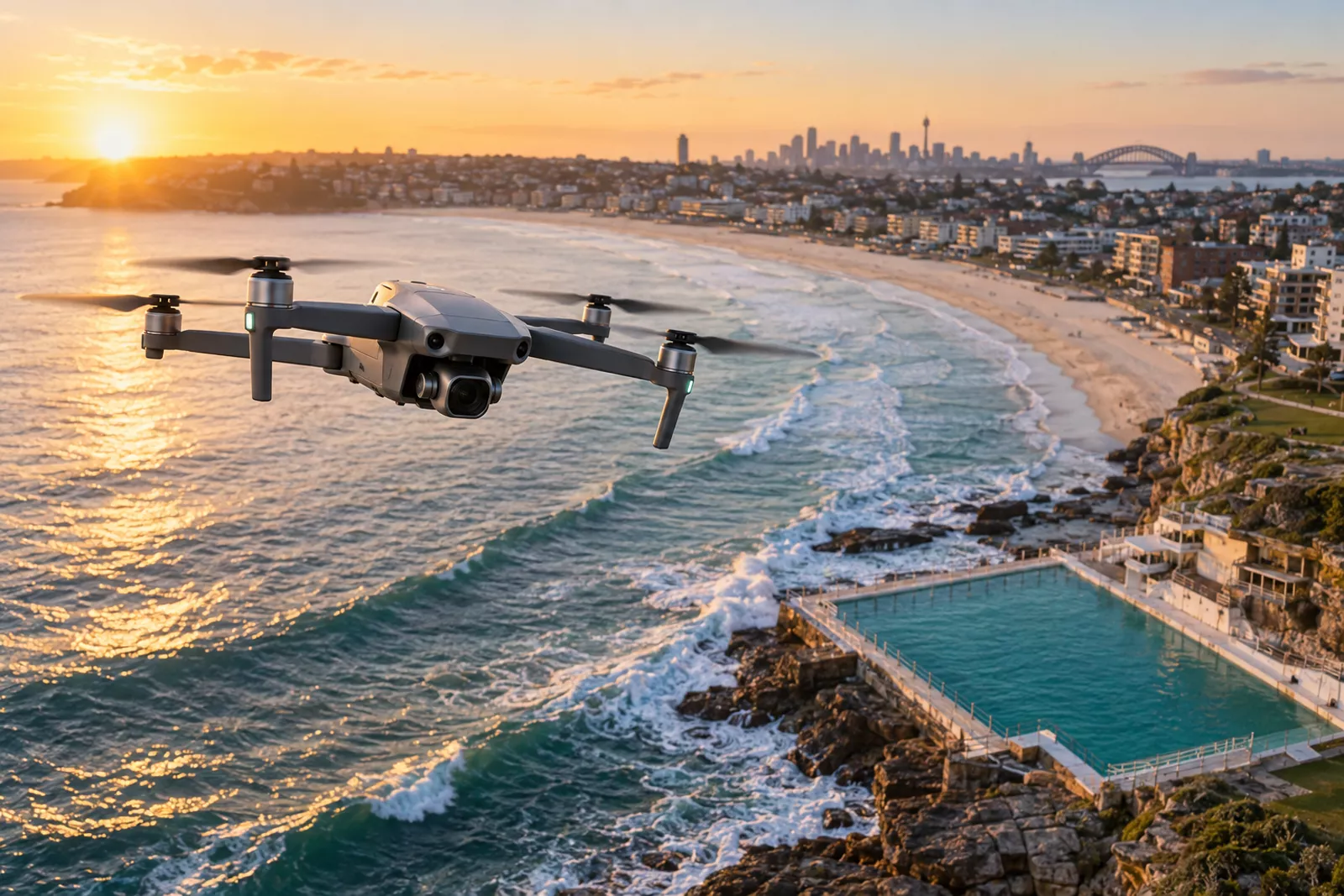
Aerial footage can transform a video. It shows the scale of a construction project, a property’s relationship to the beach, or the energy of a festival crowd in a way no ground-level shot can. But flying a drone commercially in Sydney comes with real rules, and they matter. This guide covers the essentials in plain English.
This article is general information, not legal advice. Always check current requirements with the Civil Aviation Safety Authority (CASA) or your licensed operator.
Commercial drone flying is regulated by CASA
In Australia, CASA regulates drones. Flying for business purposes, including filming for a client, has stricter requirements than recreational flying. Depending on the drone and the operation, the operator and business need the appropriate CASA accreditations, licences, registrations and operator certificates. When you hire a drone videographer, ask to see their credentials and confirm they’re covered by insurance.
Standard safety rules
Unless they hold specific approvals, commercial operators generally have to follow CASA’s standard operating conditions, including:
- Flying only in daylight and within visual line of sight
- Staying at or below 120 metres above ground level
- Keeping at least 30 metres from people who aren’t involved in the operation
- Not flying over or above people, or over populous areas in a way that creates a hazard
- Staying clear of emergency situations such as fires, police operations and accidents
- Staying away from airports, helicopter landing sites and controlled airspace unless authorised
Why Sydney is trickier than most places
Large parts of Sydney sit under or near controlled airspace, including around Sydney Airport, Bankstown, Camden, Western Sydney Airport and various helicopter landing sites. That doesn’t mean aerial filming is impossible, but it may need airspace approvals planned in advance, and some locations are simply off-limits. Licensed operators use CASA-verified drone safety apps and official airspace data to check every site.
Other permissions can also apply:
- National parks: NSW National Parks and Wildlife Service requires consent for drone use in parks.
- Council land and beaches: many councils require permission to take off and land on their land.
- Managed precincts: some harbour foreshore and city precincts have their own filming and drone rules.
- Private property: you need the owner’s permission to launch and land.
This is why it’s best to mention aerial footage early in planning, so there’s time to check the site and arrange approvals.
When drone footage is worth it
- Real estate: showing location, views, land size and proximity to the beach, parks or transport (see real estate videos).
- Construction and development: progress, scale and the finished result (see construction videos).
- Events and festivals: crowds, venues and atmosphere.
- Tourism and hospitality: the setting that makes a destination special.
- Brand videos: striking establishing shots that lift production value.
When it isn’t
Drone footage isn’t automatically good footage. A generic aerial of an office building rarely adds much. Use aerials where the setting, scale or movement tells part of the story, and keep them purposeful in the edit.
Weather and timing
Wind, rain and low cloud can ground a drone. Build flexibility into the schedule, and for real estate and landscapes aim for early morning or late afternoon light. Night flying needs specific approvals.
FAQs
Can you fly a drone over the Sydney CBD or the Harbour?
These areas have significant restrictions and nearby controlled airspace. Some shots may be possible with the right approvals and planning, and others won’t be. A licensed operator will assess each location.
Do I need to arrange permits myself?
Usually your production company handles airspace checks and advises on land permissions. You may need to request access from property owners or managers.
Is Zyon Films licensed to fly drones?
Yes. Our drone work is CASA licensed, and we plan every flight around airspace, safety and site requirements.
Want aerial footage for your next project? Talk to us and we’ll check your location and advise on what’s possible.

