
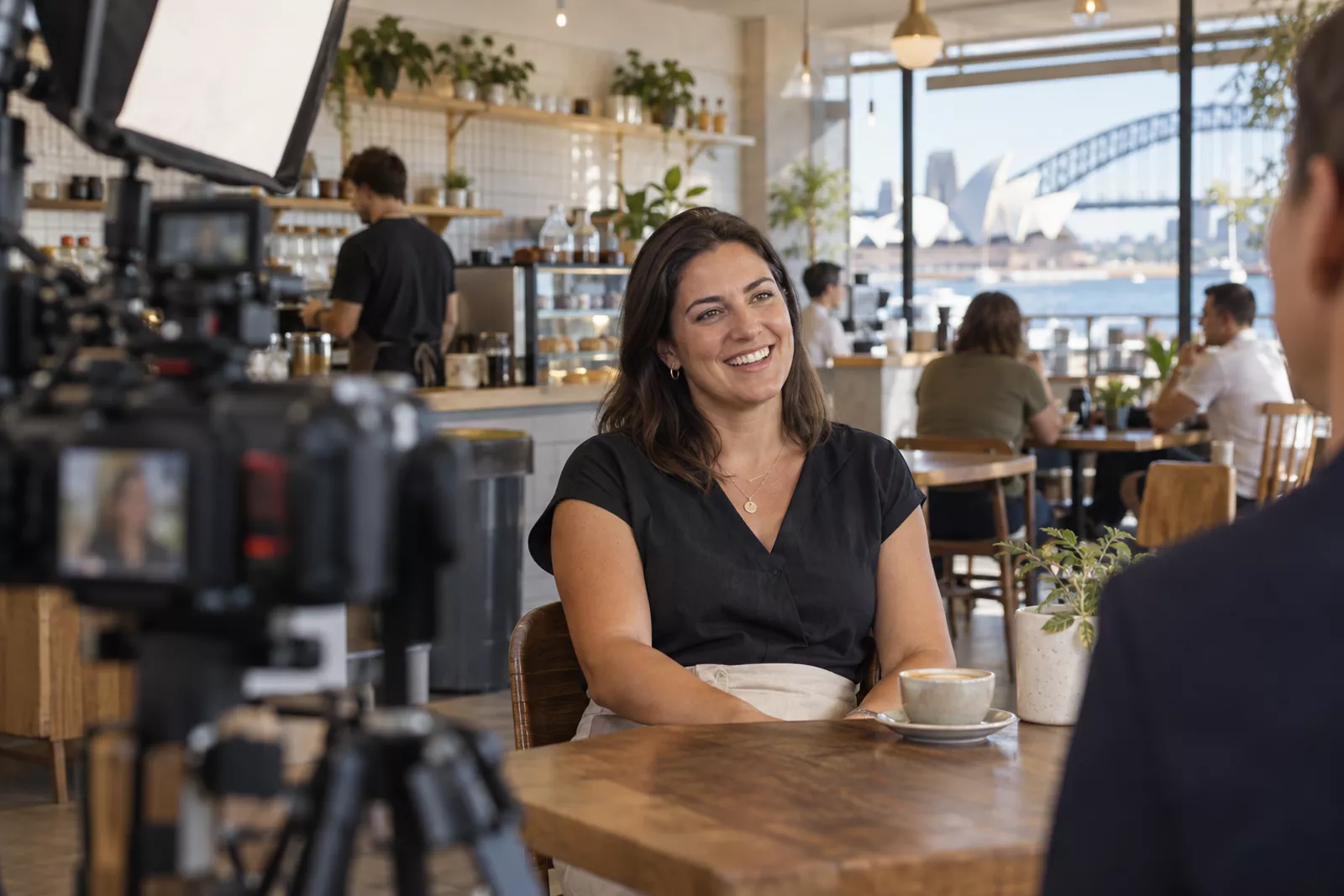
Anything you say about your own business is marketing. Anything your customers say is evidence. That’s why testimonial videos are among the most persuasive content you can make, provided they feel genuine.
A good testimonial doesn’t sound like an ad. It sounds like a real person describing a real experience, including the problem they had before they found you.
Choose the right customers
The ideal testimonial customer:
- Had a clear problem that you solved, with a result they can describe
- Resembles the customers you want more of (industry, size, project type)
- Is enthusiastic and comfortable talking. They don’t need to be polished.
- Is happy to be identified by name, role and business
Two or three different customers, each speaking to a different service or concern, are more convincing than one.
Use a story structure
The most effective testimonials follow a simple narrative:
- Before: what was the situation or frustration?
- The search: what were they looking for, and what made them choose you?
- The experience: what was working with you like?
- The result: what changed? Be specific.
- The recommendation: who would they recommend you to, and why?
This structure answers the questions a prospect is quietly asking: “Are they like me? Will this work for me? Is it worth the risk?”
Interview questions that get great answers
- What was going on before you worked with us?
- What nearly stopped you from going ahead?
- What was the process actually like?
- What result are you happiest with?
- What would you say to someone thinking about working with us?
Ask people to repeat the question in their answer so each clip stands alone. And don’t script them: authenticity is the whole point.
Address objections directly
If prospects commonly hesitate about price, timelines or complexity, ask your customer about it. “I was worried it would be expensive, but…” is far more believable coming from a customer than from you.
Show, don’t just tell
Cut the interview with footage of the customer’s business, the finished project or the product in use. It adds credibility and keeps the video visually interesting. Filming at the customer’s location, whether their office, shop or completed home, also puts them at ease.
Length and format
- Full testimonial: 60–120 seconds for your website and sales team.
- Short clips: a single strong soundbite of 15–30 seconds for social media and ads.
- Compilation: several customers in one video for your homepage.
Where testimonials work best
- Service pages, next to the call-to-action
- Your homepage and pricing or quote pages
- Proposals and follow-up emails
- Retargeting ads to people who’ve visited your website
- Google Business Profile and LinkedIn
FAQs
Should testimonials be scripted?
No. Prepare questions and themes, but let customers answer in their own words. Scripted testimonials sound fake and lose their power.
How do I ask a customer to be filmed?
Ask soon after a successful project, explain it’ll take less than an hour, offer to film at their location, and let them approve the final cut.
Can we film testimonials remotely?
Yes, although quality is lower. For your most important testimonials, an in-person interview is worth it.
Zyon Films has filmed testimonials for businesses across Sydney. We know how to put customers at ease and draw out the story. Get in touch to plan yours.