
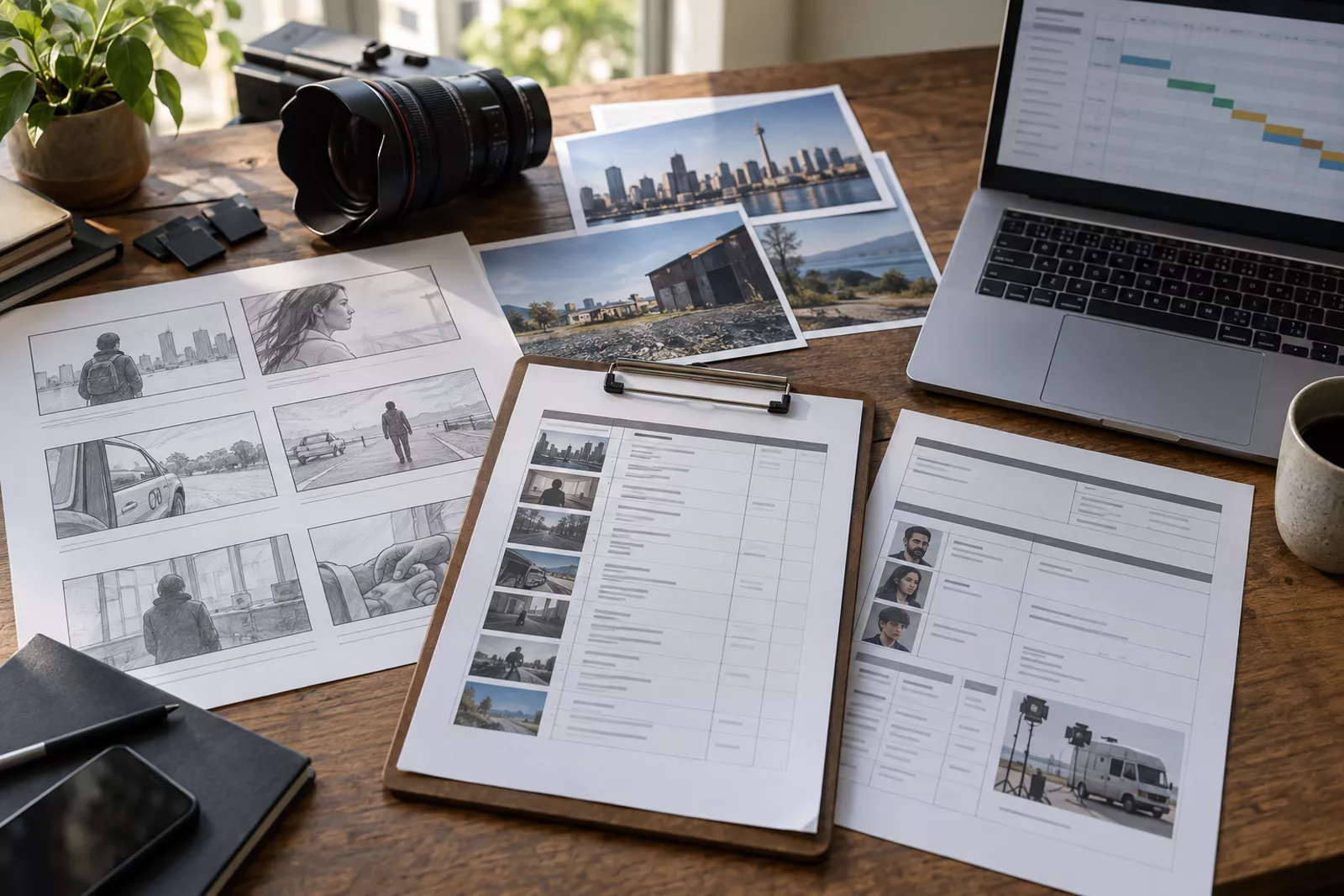
The shoot day is the part of video production people picture, but the quality of a video is largely decided before anyone presses record. Good pre-production means fewer surprises, a smoother day, faster editing and a better result for the same budget.
Here’s the checklist we work through before every shoot, and what you can prepare to help.
1. Define the objective
What should viewers think, feel or do after watching? “Book a consultation”, “apply for the role” and “trust us with a $2 million project” lead to very different videos. One clear objective per video is best.
2. Know the audience
Who is watching, where and on what device? A LinkedIn clip for procurement managers, a TikTok for 20-somethings and a tender presentation need different lengths, tones and formats.
3. Agree the key message
If viewers remember only one sentence, what should it be? Write it down. Every scene should support it.
4. Choose the format and deliverables
- Main video length and aspect ratio
- Cutdowns for social media and ads
- Caption files and subtitled versions
- Stills or photography
Deciding this now lets the crew shoot for every format on the day (see repurposing one shoot into a month of content).
5. Script or structure
Presenter-led and voiceover videos need a script. Interview-led videos need a clear structure and question list. Either way, read scripts out loud. Spoken language is shorter and simpler than written language.
6. Storyboard and shot list
A storyboard shows what each scene looks like. A shot list details every shot needed: interviews, b-roll, product shots, drone and details. Together they make sure nothing important is missed and help the crew plan lighting and equipment.
7. Locations and permissions
- Visit or review locations for light, noise, power and access.
- Book spaces and let neighbours or building management know.
- Check permits. Filming in public places in Sydney may need council approval, and national parks and some beaches have their own rules.
- Check drone airspace restrictions if aerials are planned.
8. Talent and people
Confirm who appears on camera, brief them on timing and wardrobe (solid colours, no fine stripes or small checks), and prepare consent and release forms. Professional talent may need contracts and usage rights agreed.
9. Schedule and call sheet
A realistic schedule allows time for setting up lights, moving between locations and resetting between takes. The call sheet tells everyone where to be, when, and who to contact.
10. Approvals and feedback process
Agree who signs off on the script, rough cut and final cut, and how feedback will be consolidated. Too many reviewers with conflicting notes is the number one cause of blown timelines in post-production.
What you can prepare as a client
- Brand guidelines, logos and fonts
- Examples of videos you like and dislike
- Key facts, figures and claims (with sources) to include
- A single point of contact for decisions
- Access details for locations and parking
FAQs
How long does pre-production take?
For a simple corporate video, about a week. Commercials and multi-location shoots may need several weeks for casting, locations and permits.
Do we need a storyboard for a simple video?
A shot list is usually enough for interviews and simple content. Storyboards are most valuable for commercials and scripted scenes.
What’s the most common pre-production mistake?
Unclear objectives and too many decision-makers. Agree the goal and the approvers first.
At Zyon Films, pre-production is included in every project. Get a free quote and we’ll walk you through the plan.